In this article
Introduction
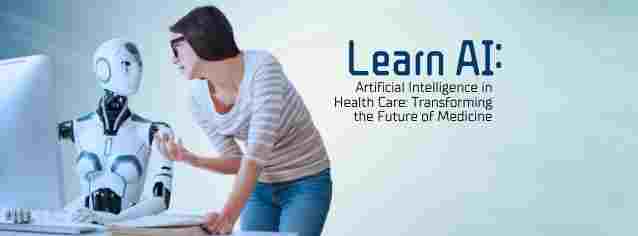
Artificial Intelligence (AI) is revolutionizing industries worldwide, but perhaps its most promising application is within the field of healthcare. The integration of artificial intelligence in health care has the potential to enhance diagnostic accuracy, streamline administrative processes, improve patient outcomes, and reduce healthcare costs.
From predictive analytics to personalized medicine, AI is transforming the way we approach medical care. This comprehensive guide will explore how AI is being used in healthcare, the benefits it offers, challenges faced, ethical considerations, and what the future holds.
What is Artificial Intelligence in Health Care?
Artificial Intelligence in healthcare refers to the use of machine learning algorithms, natural language processing, neural networks, and other AI technologies to process complex medical data. It involves using computers and advanced software to mimic human cognition for analyzing and interpreting information, making decisions, and predicting outcomes.
Key Technologies Used in AI for Health Care
- Machine Learning (ML): Algorithms that improve their performance through experience.
- Natural Language Processing (NLP): Enables computers to understand and interpret human language.
- Robotics: Surgical robots, automated systems for diagnosis, and treatment assistance.
- Computer Vision: Analyzing medical images such as X-rays, MRIs, and CT scans.
- Predictive Analytics: Identifying patterns to forecast disease outbreaks or patient deterioration.
Applications of Artificial Intelligence in Health Care
AI is being applied across various domains of healthcare, from diagnostics and treatment to administration and patient care.
1. Medical Imaging and Diagnostics
AI algorithms are increasingly being used to analyze medical images with higher accuracy than traditional methods.
- Applications: MRI scans, X-rays, CT scans, ultrasounds.
- Benefits: Improved detection of conditions like cancer, heart disease, and neurological disorders.
- Example: Google’s DeepMind applied AI to detect eye diseases with high precision.
2. Personalized Medicine
By analyzing vast amounts of genetic data, AI can help tailor treatments to individual patients.
- Applications: Cancer treatment, gene therapy, chronic disease management.
- Benefits: Enhanced efficacy, reduced side effects, cost savings.
- Example: IBM Watson for Oncology uses AI to recommend cancer treatment plans.
3. Drug Discovery and Development
AI accelerates the process of developing new drugs by analyzing biological data.
- Applications: Identifying potential drug compounds, predicting drug interactions.
- Benefits: Reduced research time, lower costs, increased efficiency.
- Example: Insilico Medicine uses AI to discover novel drug candidates.
4. Virtual Health Assistants
AI-powered chatbots and virtual health assistants provide personalized health advice and improve patient engagement.
- Applications: Symptom checking, medication management, appointment scheduling.
- Benefits: Enhanced accessibility, reduced burden on healthcare professionals.
- Example: Ada Health, an AI-driven symptom assessment tool.
5. Robotic Surgery
AI-driven robotic systems enhance surgical precision and reduce recovery times.
- Applications: Minimally invasive surgeries, orthopedic procedures, cardiovascular interventions.
- Benefits: Reduced complications, improved outcomes, quicker recovery.
- Example: The da Vinci Surgical System, an AI-assisted robotic platform.
6. Predictive Analytics and Risk Assessment
AI tools predict disease outbreaks, patient deterioration, and treatment outcomes.
- Applications: Predictive modeling for chronic disease management.
- Benefits: Preventative care, reduced hospital readmissions.
- Example: The Cleveland Clinic uses AI for early detection of heart disease.
7. Administrative Applications
AI streamlines tasks such as billing, claims processing, and record keeping.
- Applications: Electronic health records (EHR), fraud detection, resource allocation.
- Benefits: Improved efficiency, reduced operational costs, minimized human error.
Benefits of Artificial Intelligence in Health Care
The application of AI in healthcare offers numerous benefits, including:
- Improved Diagnostic Accuracy: Enhanced image analysis and predictive models reduce diagnostic errors.
- Personalized Care: Tailored treatment plans based on individual patient data.
- Operational Efficiency: Streamlined administrative processes, saving time and resources.
- Cost Reduction: Optimized workflows and better resource management.
- Accessibility: Remote monitoring tools improve access to healthcare in underserved areas.
Challenges and Limitations
Despite its benefits, the implementation of AI in healthcare faces several challenges:
- Data Privacy Concerns: Ensuring patient confidentiality and data security.
- Bias and Fairness: Addressing biases in algorithms that may lead to unequal treatment.
- Regulatory Compliance: Navigating complex legal frameworks for AI deployment.
- High Costs: Implementing AI solutions can be expensive for small institutions.
- Technical Limitations: Difficulty in integrating AI systems with existing infrastructure.
Ethical Considerations
The use of AI in healthcare raises important ethical questions, including:
- Accountability: Who is responsible if an AI system makes a harmful decision?
- Informed Consent: Ensuring patients understand AI-driven treatment recommendations.
- Transparency: Making AI algorithms understandable and interpretable.
- Equity: Preventing bias against underrepresented populations.
Future Trends of AI in Health Care
AI in healthcare is evolving rapidly, with future trends including:
- Augmented Reality (AR) and Virtual Reality (VR): Enhancing surgical precision and training.
- AI-Powered Wearable Devices: Providing continuous health monitoring.
- Natural Language Processing (NLP): Improving patient interactions and diagnostic accuracy.
- AI-Driven Genomics: Unlocking personalized medicine through genetic analysis.
Conclusion
The integration of artificial intelligence in health care is transforming the medical field, offering unprecedented opportunities for enhancing diagnostics, treatment, and patient care. While challenges remain, ongoing advancements and innovations are likely to address these issues and make AI an indispensable tool in modern medicine.
As technology continues to advance, the healthcare industry must adapt to harness the full potential of AI, ensuring improved outcomes for patients and streamlined processes for providers.

Md Saizul Amin
Digital Systems Strategist · AI Agent Developer · 9+ years in digital & ITMd Saizul Amin is a digital systems strategist and AI automation engineer from Dhaka, Bangladesh. With 9+ years across IT, web development and digital marketing, he writes practical guides on technology, business, education and online growth — and builds the same kinds of systems (AI agents, websites, SEO and ad campaigns) for clients in Bangladesh, the UK and the USA.
Specialist in
Credentials & experience
- 🎓B.Sc. in Computer Science & EngineeringBangladesh University of Business & Technology (BUBT), 2017–2021
- 🤖AI Automation Engineer · Web Developer · SEO SpecialistUnique Mark Limited, Birmingham UK — 2024 to present
- 🌱IT SpecialistGreen Fund Initiative Inc., USA — 2024 to present
- 🏥Junior IT Consultant — Ministry of Health (DGHS)Built the first national Shareable Health Record website; supported 6,000+ facilities
- 🧭Head of ITWEDO Bangladesh — led IT for 50+ staff, 2021–2023